
Work makes a comeback
Is Artificial Intelligence still taking away everyone's job? Probably not.

They used to say that we would all lose our jobs to AI. Then they started to downgrade the warning by saying that our jobs won’t be taken by AI, but they will be taken by people who know how to use AI.
The first of those predictions was widely seen as extremely alarming. The second was seen as not quite so scary, but still a serious wake-up call to people of working age or younger.
The reality is that the second prediction is in no way a downgrade from the first. A world in which AI users have a clear advantage in the jobs market is a totally different matter altogether from a world with no human workforce. And, actually, it’s really not something that anyone needs to worry about.
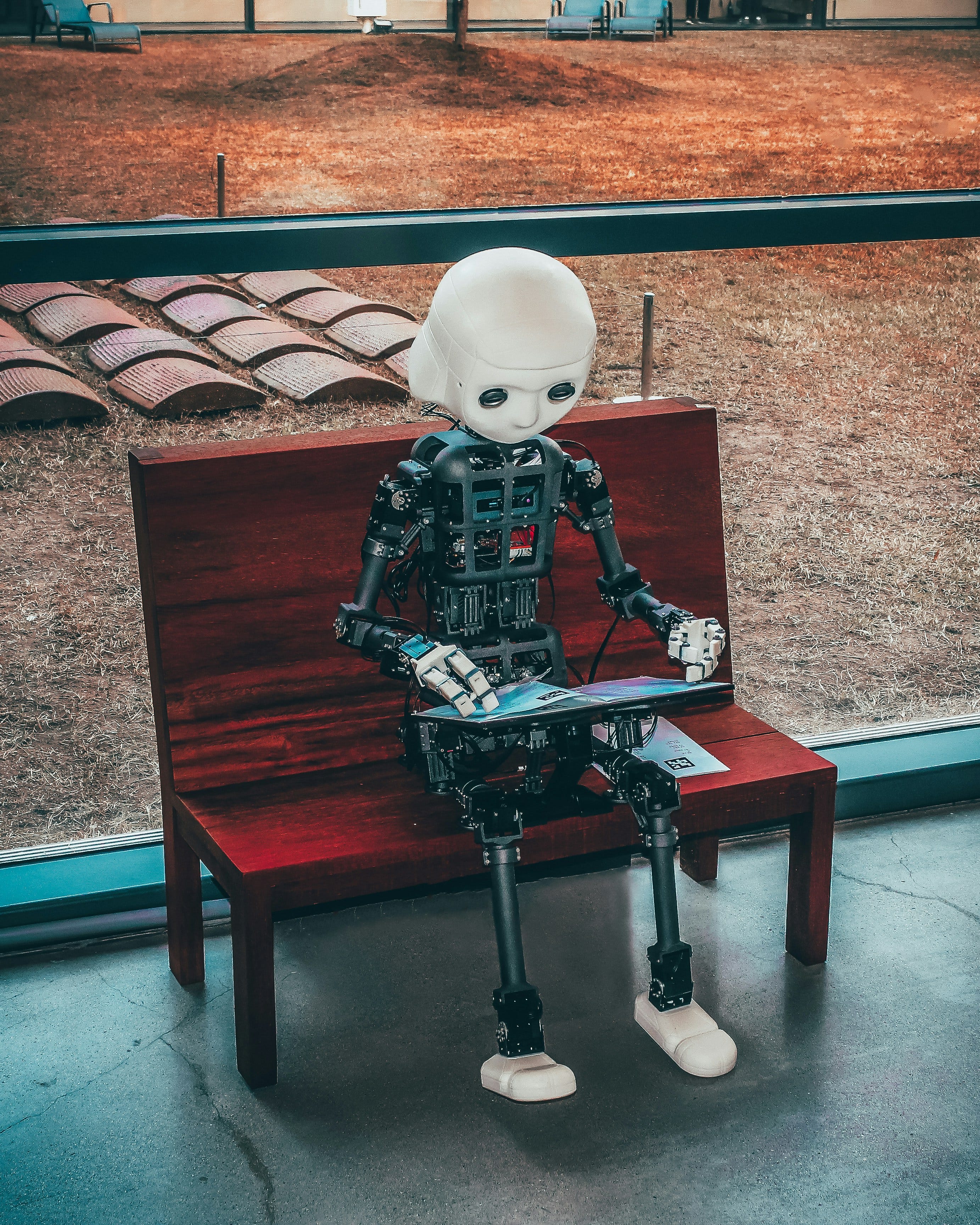
Let’s break this down.
Everyone losing their jobs would have immense repercussions. To many people, a world without work sounds like a world without income. But, of course, if all economic activity can be carried out by machines – literally all economic activity because that’s what it means if AI takes over everyone’s job – the value of all goods and services in the economy is maintained (and likely increased). So humans can still be remunerated. The challenge would be to find a way to divvy up the income if none of us made an input to its creation.
The reality is that we will never reach a stage where robots and AI take over all jobs. I can give you two examples right away: politics and professional sport. Those are by no means the only two examples I might give. Nor are they the most important. They are just two of the easiest examples to demonstrate that not all human activity can be replaced by electronics.
It was famously said ten years ago that hospitals should stop training new radiologists because AI was on the verge of rendering humans redundant in the field. It hasn’t happened. Radiologists are still at the heart of medical image interpretation and, as anyone who has waited weeks for the result of a scan will know, we need more radiologists in the NHS, not fewer.
It may be tempting to say that politicians are all useless and we might be better off with machines in charge. But politics is as much, if not more, about the choices made by government than it is about the competence to deliver the results of those choices. So long as the views in society differ, there will need to be a means by which society makes its decisions. Politics might change over time (and not just because of AI), but it will always need humans at its centre.
If a world without jobs is not achievable and a world with fewer human jobs is not scary, so long as the value of all goods and services is maintained, what about the alternative scenario in which users of AI displace non-users?
We have been here before.
When computers became small enough and cheap enough to be placed on our desks, work changed. In the early days, those who knew how to use the machines had an advantage over those who didn’t. Those in jobs which could make good use of computers made it their business to learn how to use them. Employers who wanted their staff to use the technology ensured they were trained in the skills required. And it was exactly the same when the internet landed.
When we say that those who can use AI will be at an advantage in the workplace, we really mean that those who can devise new ways for AI to be used will have an advantage. As was the case with spreadsheets, presentation software (ie PowerPoint), websites … and the rest. When new technology arrives, people who want to get ahead learn to use it. Those who are comfortable lagging behind wait until it is foisted upon them by their employers, their schools or their (grand)children.
I know there will be readers of this article who (if they have stayed with me to the end) will think that I simply don’t understand AI or the impact it is having on the world. They may be right. But so long as AI itself demonstrates, time and time again, that it manifestly doesn’t understand the world in which it exists, I am comfortable with my core belief. It is truly amazing what has been achieved in recent years, but so long as AI is a giant probability machine, there will be limits to what it can deliver and who it can replace.
What happened to all those monks, when Gutenberg invented printing? Just asking
AI can’t fully understand the world in which it exists because it will never be subject to the same environment primers and levers as humans. It doesn’t have source a roof over its head or navigate economic dynamics to « earn a living ». It cannot smell and taste. The only thing that can happen is we can dumb down enough to think it is superior.